
Myofascial Release
in Istanbul.
Near Etiler & Akatlar.
Fascial therapy for chronic muscle tension, trigger points, neck, back and shoulder pain. English-speaking clinic near Etiler, Levent and Bebek — individual sessions, evidence-based approach.
English-Speaking Clinic
NKT · Fascial · Manual Therapy
Fascial therapy in Istanbul
near Etiler and Akatlar.
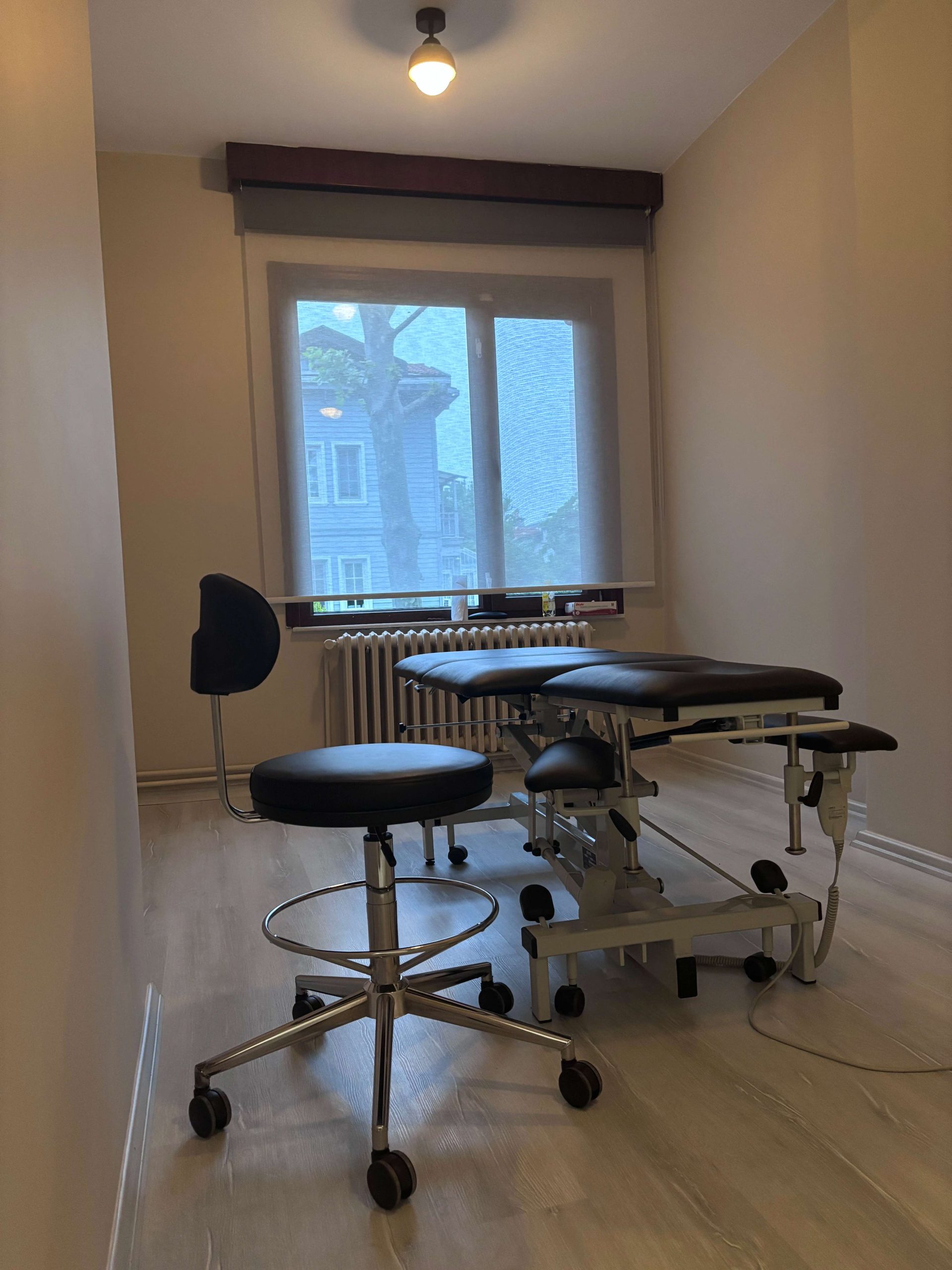
Ulus Physiotherapy provides myofascial release in Istanbul at Akatlar Cebeci Caddesi No:34, Beşiktaş — an English-speaking physiotherapy clinic near Etiler, Levent, Bebek and Ulus. Led by Physiotherapist Sefa Göben, fascial therapy sessions are integrated with chiropractic-based joint mobilisation, NKT (Neurokinetic Therapy) and — where clinically indicated — osteopathic assessment by Physiotherapist Selin Atalay. Whether you are an expat dealing with chronic muscle tension, a desk worker with persistent neck stiffness, or an athlete recovering from a soft tissue injury, each session is planned individually based on clinical assessment.
What Is Myofascial Release?
Myofascial release (MFR) is a hands-on physiotherapy technique targeting the fascia — the continuous connective tissue network that surrounds every muscle, organ and nerve in the body. “Myo” refers to muscle; “fascial” refers to this surrounding connective tissue. The technique involves sustained manual pressure, gentle stretching and trigger point release to address restrictions within this system.
Unlike a standard massage, myofascial release focuses not only on where you feel pain but on the broader fascial chain — recognising that restrictions in one area often drive symptoms in another. Someone with lower back pain, for example, may have a primary restriction originating in the hip flexors or thoracic region.
Why Does Fascia Become Restricted?
Healthy fascia is pliable and well-hydrated. Under the following conditions it can stiffen, dehydrate and restrict — contributing to chronic pain and reduced movement quality:
- Prolonged static posture — Desk work, driving or repetitive positioning causes progressive fascial loading and adaptive shortening.
- Acute or accumulated trauma — Falls, accidents, sports injuries or surgical procedures can trigger inflammatory changes that lead to fascial adhesions.
- Chronic stress and shallow breathing — Sustained stress alters respiratory patterns, loading the cervical, thoracic and shoulder fascia over time.
- Postural imbalances — Scoliosis, forward head posture, pelvic tilt and shoulder asymmetry create uneven fascial tension across the body’s kinetic chain.
- Inactivity or overuse — Both extremes — too little movement and repetitive overload — can compromise fascial health and resilience.
These restrictions often present as trigger points, chronic muscle tightness, reduced range of motion and diffuse aching. Myofascial release in Istanbul at Ulus Physiotherapy addresses these patterns through structured clinical assessment, not symptomatic relief alone.
Who Is It Suitable For?
Following individual physiotherapist assessment, myofascial release may be considered for:
- Chronic neck, upper back or lower back tension
- Trigger point pain and referred muscle aching
- Long-term desk workers and screen-heavy professionals
- Athletes recovering from soft tissue or overuse injuries
- Postural imbalances, scoliosis or thoracic kyphosis
- Fibromyalgia and widespread musculoskeletal sensitivity
- Post-surgical scar tissue and soft tissue restriction
- Stress-related neck, shoulder and jaw tension
- Expat and international patients in Istanbul seeking English-language physiotherapy
Our Approach at Ulus Physiotherapy
At Ulus Physiotherapy, myofascial release near Etiler is not offered in isolation — it forms part of a broader clinical assessment and treatment plan. The first session with Physiotherapist Sefa Göben includes postural analysis, movement assessment, identification of fascial loading zones and review of contributing biomechanical factors. A personalised protocol is then designed.
Techniques used may include deep tissue fascial work, sustained trigger point pressure, fascial chain mobilisation and corrective movement re-education. A home exercise programme supports the in-clinic work between sessions.
Integrated with Manual Therapy, NKT and Osteopathy
Fascial restrictions rarely exist in isolation. At Ulus Physiotherapy, myofascial release is regularly combined with:
- NKT (Neurokinetic Therapy) — Identifies the neurological compensation patterns that keep fascial restrictions locked in place. Without addressing the motor control component, fascial release alone often provides only temporary relief.
- Chiropractic-based joint mobilisation — Spinal and peripheral joint restrictions contribute to fascial loading. Addressing both simultaneously produces more durable outcomes.
- Osteopathic assessment — Physiotherapist Selin Atalay adds craniosacral and visceral fascial context where deeper systemic patterns are present.
- Physio AI 3D posture analysis — IMU sensor data makes fascial loading patterns visible and progress objectively trackable.
This integrated model means treatment addresses the origin of fascial dysfunction — not just the symptomatic location.
The physiotherapists
leading your care.

Phys. Sefa Göben
Myofascial & Manual Therapy LeadLead physiotherapist for myofascial release at Ulus Physiotherapy. Combines deep fascial work, NKT and chiropractic-based joint mobilisation with Physio AI-assisted 3D movement analysis. Every session begins with comprehensive postural and fascial loading assessment. Conducts all sessions in English.

Phys. Selin Atalay
Osteopathy & Craniosacral Fascial SpecialistSupporting specialist for complex fascial cases. TIFAO-trained osteopath adds craniosacral and visceral fascial perspective where deeper systemic restriction patterns are present. Involved where conventional myofascial work requires a broader whole-body structural lens.
Grounded in
published evidence.
Our myofascial approach is informed by internationally recognised health organisations and peer-reviewed research.
Myofascial release is recognised as an evidence-based manual therapy technique for chronic pain, trigger points and musculoskeletal restriction — distinct from general massage in its targeted fascial approach.
Read on ClevelandClinic.org →NHS UK recognises physiotherapy-based manual techniques — including fascial approaches — as part of evidence-based care for musculoskeletal pain and movement restriction.
Read on NHS.uk →Published studies support myofascial release in the management of chronic musculoskeletal pain, neck tension, low back pain and fibromyalgia when applied as part of a structured treatment plan.
View research →Near Etiler, Levent,
Bebek and Akatlar.
Address
Akatlar Cebeci Caddesi No:34
Beşiktaş / Istanbul
Hours
Monday – Friday
09:00 – 19:00 · Free parking on-site
Nearby Neighbourhoods
Etiler · Levent · Bebek · Ulus
5–10 min drive from each
Questions about
myofascial release.
What is myofascial release?
Myofascial release is a hands-on physiotherapy technique targeting restrictions in the fascia — the connective tissue surrounding and connecting all muscles, organs and nerves. Applied through sustained pressure and gentle stretching, it aims to reduce chronic muscle tension, release trigger points and restore movement quality.
Who is myofascial release suitable for?
Individuals with chronic neck, back or shoulder tension; desk workers; athletes recovering from overuse injuries; those with postural imbalance, scoliosis or fibromyalgia; and anyone experiencing trigger point pain or reduced range of motion. Expat and international patients in Istanbul are welcome — all sessions are conducted in English.
Is myofascial release painful?
You may feel mild pressure or a stretching sensation — this should not be intolerable. Your physiotherapist adjusts intensity to your comfort threshold at all times. Most patients report significant relief and improved movement after treatment.
How many sessions are needed?
This depends on the individual condition, the extent of fascial restriction and treatment goals. A personalised plan is made following the initial assessment. When combined with NKT or manual therapy, progress typically accelerates.
Where can I find myofascial release in Istanbul near Etiler?
Ulus Physiotherapy is at Akatlar Cebeci Caddesi No:34, Beşiktaş, Istanbul — minutes from Etiler, Levent and Bebek. Physiotherapist Sefa Göben leads myofascial release sessions in English, with free parking available on-site.
Can myofascial release be combined with manual therapy or NKT?
Yes. At Ulus Physiotherapy myofascial release is regularly integrated with NKT, chiropractic-based joint mobilisation and — where clinically indicated — osteopathic assessment by Physiotherapist Selin Atalay. This integrated approach targets the neurological and biomechanical drivers of fascial restriction, not just the surface symptoms.
Ready to start
your recovery?
Akatlar Cebeci Caddesi No:34, Beşiktaş. English-speaking clinic. Free parking.